Sunday, August 26, 2007

birthday wishes

Birthdays are a funny thing. Their value seems to deteriorate over time. As a kid, I remember thinking that my birthday was basically the most important day in history – minus Christmas of course. I would toss and turn all night long the night before my birthday thinking about how much fun the following day would be – games, friends from school coming over and spending the night, cake and ice cream, and, of course, presents! As I get older, though (yes, I know I’m old), birthdays become a thing I try and forget or ignore. It becomes just another reminder that my back and knees are aching more – and that maybe that ache isn’t just from my old job, but from the fact that I’m getting old! It’s not really all that bad, and I’m mostly just joking, but the truth of the matter is that birthdays – as I see them – just really aren’t that big of a deal. I saw a very different perspective today.

There’s a very nice lady named Mary that lives next door to us in a mud hut with her two sons, Delvyn and Manuel. The family lives in abject poverty, but somehow, they manage to survive – and live a very happy life. Those two boys are two of the nicest, kindest, and most loveable kids I’ve ever met. I talk with Mary once in a while. Her English is actually very good – a constant reminder to me that poverty does not necessarily equal lack of knowledge, and that I (living my affluent life in America) am actually the ignorant one – knowing only one language (some of you would probably say that I haven’t really even mastered that one yet).

Mary was talking with one of the girls we work with here at One Acre Fund this week, and somehow, the conversation turned to birthdays. Mary told my friend that Manuel’s birthday was coming up on Saturday. He would be turning four. In fact, Delvyn’s birthday was coming up as well – about a week from now. He will turn ten. “When are you going to have the party?” my friend asked. “Sorry?” Mary said – a look of bewilderment on her face. “The birthday party for the kids – when are you going to have it? Are you planning on inviting a lot of kids?” my friend asked. Mary’s eyes began to water. “No, we’re not having a party.” “What do you mean?” my friend asked. Mary slowly went on to explain that the children had never had a birthday celebration. No cake…no singing “Happy Birthday”…no friends…and no presents. Mary began softly crying. My friend was astonished. We determined that we were going to throw these kids a birthday party.

After careful planning, we threw the party yesterday. It was one of the most touching things I’ve ever witnessed. My other two friends managed to make a cake (not sure how they achieved that one) – complete with “Happy Birthday Manuel” and “Happy Birthday Delvyn” written in some sugary concoction resembling icing on the top. I managed to acquire some balloons and helped Mary decorate her hut with them. The time for the party finally came and I strolled next door to see how things were going…wow. That’s all I could say. I ducked my head and walked through the door into Mary’s tiny mud hut…and into a sea of kids – about twenty of them (ages 3 to 12) from the neighborhood – all singing and laughing and jumping around – having the time of their lives. Of course, when I walked in, I was instantly inundated by happy shouts of, “Habari Mazungu?” (how are you), “Karibu!!” (welcome), and “Sasa, Mazungu?” (what’s up, white dude – loose translation). Since most of these kids had never seen a white person before One Acre Fund came, they get pretty excited when I come around.

Mary had never thrown a birthday party before, so she wasn’t really sure what they were supposed to do, but she did just fine nonetheless. She had the kids taking turns reciting poems, leading songs, and playing simple games. None of these kids had ever been to a birthday party before. They were all very excited – bouncing of the walls like they had just finished off four pots of coffee.

Manuel and Delvyn were dressed up like little gentlemen in their nicest shirts for the occasion. Mary had managed to make popcorn which the kids quickly devoured (popcorn is an unusual treat here) and everyone had a small glass of sugar water. Then came the highlight of the party…the cake. My friends brought the cake around to the back door and gave it to Mary. She lit the candles (that she had fashioned out of old paraffin) and then slowly brought it into the room…singing “Happy Birthday to you…” Those kids had never seen a birthday cake before. They went crazy!!! I think they sang “Happy Birthday” to Manuel and Delvyn approximately 7,000 times – they just couldn’t get enough. When they finally calmed down, everyone just kind of sat there…waiting – not sure what to do next. Mary looked at me with a questioning look on her face. I explained that Manuel and Delvyn should maybe make a wish and blow out the candles, and then cut the cake so everyone could eat it. Little Manuel seemed terrified of the fire on the cake, so his big brother took care of blowing out the candles – which prompted another round of ecstatic cheers and another hundred rounds of the “Happy Birthday” song. Mary then cut the cake into tiny, tiny squares and served them to the kids like little bite-sized appetizers.

After the cake-cutting, the party started winding down. Manuel started getting impatient and cranky and began crying when Mary tried to feed him a second piece of cake. It was time to go. Mary thanked everyone for coming and then sent the kids home with their mothers who had quietly shown up to take their kids home.

I walked home deep in thought – thinking about this summer that God has used to shape my life in such a profound manner. Sadly, my time here is almost over. I will get on a bus Tuesday morning to make the long, bumpy journey back to Nairobi to catch a flight to the next phase of my life. I will miss the people and close friends that I have made here – Kenyans and Mazungus alike – Daniel, Abysolom, Josephine, Charles, Andrew, Chris, Makiko, Mary…all have left a mark on my life in their own special way. All have helped prepare me for what the future may hold and my plans going forward with Nuru International. They have taught me so much. I have already used many of their lessons in the extensive revisions that I have made to the business plan for Nuru. I am more excited than ever to get started.

At the same time, though, I am ready to come home. I could sure use a slice of Applewoods Pizza and a cup of Starbucks (yes, I am a hopeless slave “to the man” – Nescafe instant coffee grounds can only get you so far). I miss my friends and family – you all who have faithfully followed my journey here this summer. This has been an incredible time for me as I walk around this corner in my life into my new beginning. Thanks so much for sharing in this walk with me. Your comments and emails have been a constant source of support and encouragement to me. This will be my last posting. The next time you hear from me, it will be in person. I can’t wait to see you all.

As the last faint remains of sunlight gave way to the first stars of the night above me, I listened to the kids laughing and chasing one another as they made their way back to their homes. The party was such a huge success. There was no Chucky Cheese, no pizza, no Coke, no Kool-Aid, no paper plates, no utensils, no music, no pony, no clowns, no streamers…not even any presents. Yet, that room was so full of love and happiness. I have seldom seen such a happy group of kids. There are so many in this world like Mary and her family who have so little. We take even the smallest things in life for granted – I am guiltier than most about this; but I was reminded today that life isn’t about things. It’s not about what we have or don’t have. It’s not about how popular we are or how important we can become in the eyes of others. It’s not about accumulating a large amount of wealth for some future grand retirement plan. I was reminded today – in the innocent laughter of these kids – that life is about loving your fellow man. It’s about giving of yourself to see the joy light up in another’s face. We are only given one life in this world to live…how will you live that life?

God bless each of you.

jake

Sunday, August 12, 2007

my new beginning...

Thursday August 9, 2007
One of the more uncomfortable “adventures” I had while in the Marine Corps was the prisoner of war (POW) training we had to go through at Force Recon. The Navy has this diabolical little school called SERE to accomplish this training. There, you learn (among other things) how to survive and resist in a prisoner of war camp once captured behind enemy lines. They do this by actually putting you into this situation – during part of the course, you find yourself in a very realistic capture/ POW camp scenario somewhere in the mountain wilderness in northern California – complete with interrogations and not-so-pleasant techniques to get information from you. During one of these little “sessions,” I found myself in a tiny black box for several, long hours. This box isn’t exactly designed for the comfort of 6’3” fat kids like myself. The box is so small that I had to ball up like a fetus and put my head between my knees while they closed and locked the box lid on top of my head. The only hole in the box was a quarter-sized hole located approximately across from my mouth. They then set the box in the hot sun for a little while – not exactly a comfortable experience. Anyways, the point of this seemingly ridiculous tangential story is that I found myself having a very similar experience this weekend. The Kenyans have a torture device as much (or more) effective than my friend, the little black box – it’s called the matatu – their main source of public transportation.

The matatu transportation system is nothing short of hilarious…I say hilarious because it’s so frustrating, that unless you just laugh, you will develop an ulcer after less than two weeks here. There are no schedules, no regulated fees, no tickets, and no rules really. Sadly, the matatu is also the only real option for transport between towns and major cities along Kenya’s carpet-bombed road network. No one has cars here – well, almost no one. Government officials and wealthy business owners own vehicles, but the roads here are primarily populated by the beloved matatu or it’s little cousin, the pujo (7 passenger). Matatus are 14 passenger Nissan vans that I’m sure are real gems when first purchased.

The way the system works is as follows. I’ll just run you through a typical scenario. Let’s say you want to travel from Kakamega to Bungoma (a distance of around 35 miles) to go to work. No big deal right? Here’s how it works. You first go to the matatu stage. You get there usually by paying some kid to give you a ride on the back of their bicycle (called a boda boda) the ten minutes to the stage. The matatu stage actually serves as a “bus station” of sorts – but is run more like a carnival. As soon as the kid drops you off, you are instantly swarmed by these idler dudes – I’ll explain their role in this complex system in a second. There are usually around twenty to thirty matatus at each stage. Each matatu has a driver and a “conductor” (read shrewd business man/ con-man). The driver sits in the driver seat revving the engine and sounding his horn/siren/whistles/foghorn – or whatever other attention gathering device he may have to “attract” potential passengers. The conductor partners with several of these “idlers” to fight for potential passengers as they come up to the stage. You see, most of them are going to the same place and they want to go and come back quickly so they can maximize profits…these fellows go long lengths to maximize profits. When I say “fight,” sometimes (but not often) it actually comes to that. As you dismount your boda boda, here come the idlers.

A quick note on idlers…these are some of the laziest guys I’ve ever seen. They don’t want to work, so they hang out at the matatu stage, get drunk, harass passengers into going into the matatu they have “partnered with,” and then force the conductor to pay them a fee for their exceptional, absolutely necessary service – that of taking a person (who was already going to go to that matatu) up to the matatu.

So, the idlers come up and begin pushing one another and shouting – trying to get you to go with their matatu. The conductor is usually there as well to shout out some price (which he will greatly inflate once you actually get in). Once you “choose” your matatu, you climb in and, if you’re new to matatu travel, you’re told to go to the most comfortable seat on the vehicle – the far back corner directly over the heater with no head room. Then, you wait… Remember I said that there are no schedules and no real fixed prices. Hopefully, you have negotiated a somewhat reasonable price for the trip – which you can only really do after you have traveled that route a few times and realize what the locals are paying. So, you sit in the back corner eating your knees in the blistering heat as the conductor waits for the matatu to “fill.” “How long till we take off?” I asked the first time I had this joyous experience. “Short time mazungu,” he said, “ten…maybe fifteen minutes.” As you sit there and wait, you are constantly harassed as about 15,000 vendors come up to your window (mazungu = money = sucker) trying to sell you everything from the newspaper to flashlights to shoes. An hour later we finally pull out of the stage with – not 14 – but 24 passengers crammed into that thing.

The trip is even more fun than the actual wait to leave. First, there’s the road conditions (I believe that I have already alluded to the bombing run-type pothole surface that passes as a tarmac road here). The roads combined with the already brutalized suspension of the matatu – make for a smooth, pleasant, Cadillac-like driving experience. The matatu stops approximately every 50 meters along the way (slight exaggeration…but close) to try and jam more people in who are trying to get to said destination in order to maximize their profits.

All this to say that I took a 6 hour journey in one of these babies this week and it made me reminisce “fondly” of my prior POW training…Manhattan cabbies have nothing on these guys.

Sunday August 12, 2007
This entire summer has proven to be one incredible experience to be sure, but I think this weekend was the capstone of my journey here in Kenya over the last few months. This weekend, I visited the Kuria District…the site that I was hoping would potentially become the first pilot project in September 2008 for this little venture that John and I are calling Nuru International. I had pretty much been waiting all summer to take this trip. It was a pretty incredible experience – seeing all the pieces of the puzzle fall into place, and I was filled with a sense of excitement, hope, and firm resolve as I left the area today to come back to Kakamega…finally knowing that yes, this project is going to be a reality, and yes, Kuria will be the first of perhaps many communities we will partner with.

When I arrived in Kuria on Friday, I was greeted by my good friend, Sangai Mohochi – professor of Kiswahili at Stanford (and my reason for going to Kuria in the first place). Sangai had invited me to his home for the weekend. He wanted me to see – firsthand – the poverty in Kuria. Sangai had gone home to visit his family for a couple months this summer, and he had arranged for me to stay with him on his family’s farm. I was humbled by his family’s incredible hospitality and found myself a bit embarrassed (as I have so many times this summer) by the wealthy lifestyle I live every day back home. Over the years, Sangai and his family have experienced many of the problems that we hope to help solve through Nuru. Sangai lost two siblings growing up – one to Malaria and one to HIV/AIDS. The family’s daily struggle to survive, and Sangai’s father’s unwavering dedication to ensuring that the children received an education were nothing less than courageous. The insight that he and his family (particularly his older brother, Phillip) have provided will be invaluable to me in looking forward.

My friend considers himself to be very blessed in his life, and he constantly speaks of how thankful he is to God for giving him so many opportunities. He is one of only seven people in the history of the Kuria District (population 230,000) to get a PhD. On top of that, he was able to secure a lecturing position at Stanford University. He is an extraordinarily hard worker, and he is well respected by his superiors, peers, and students alike. One of the things I admire most in Sangai, though, is his humility and his desire to return to his roots and help the poor in his homeland. His story is truly inspiring. He has come full circle now back to his home where he grew up as a child in abject poverty. It is his humility that first pointed me to Kenya…and eventually resulted in my journey to Kuria.

Originally, my plans for the weekend had been vague at best. My goal was to do a basic needs analysis to determine if Kuria was a feasible project for Nuru to launch with. I wanted to determine what the level of need was in the community and whether there would be enough of a support structure (infrastructure and government support) to make an infant Nuru pilot project even feasible. To be honest, I really had no idea what I was doing or what to expect, so I just prayed a lot about it and went.

I had asked Sangai and his brother Phillip to arrange a meeting with some of the leadership in the community so that we could begin to lay the groundwork for what a project might look like and to establish what the true needs of the community really are. I also asked that they keep expectations among the people very low because I was unsure going in whether we would actually be able to return and initiate a project there.

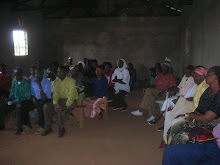
We arrived a bit late because it took about an hour to walk to the meeting. When we finally arrived, I was a bit overwhelmed. Representatives from at least thirty groups in the community were present – along with the local government officials – all waiting patiently to hear what I had to say. Someone opened in prayer and then they all sat down watching me expectantly…for one of the few moments in my life (as many of you can verify), I found myself temporarily speechless. These were real people – real farmers – like Sangai and his family struggling daily to survive – all with hopes and dreams for a better future. Some of them had walked several hours to come and hear what this Mazungu had to say. I said a silent prayer myself, and then began. I’m afraid what I said wasn’t elegant or refined. In fact, I’m quite sure that if any one of you had been there, you would have wondered at my lack of ability to deliver any semblance of an inspiring speech. I’m not sure how it happened, but the meeting progressed – and it became very productive. I explained what Nuru was all about. My goal was to hear from the people an unbiased list of needs and explanation of their current living conditions. They took over the meeting, and I got a ton of information. They weren’t complaining – they were just stating facts about their lives. Facts like the following:


- When a family member becomes extraordinarily ill, they are either carried on someone’s back or moved in a wheelbarrow for up to thirty kilometers to the nearest health center…some die along the way.
- Women walk for up to five hours for a roundtrip to go get safe drinking water for their families. When they get to the water point, they often wait in line for one hour to get water.
- Almost all families suffer from a hunger season.
- There are two doctors for the entire population of 230,000 people.
- Young girls are forced to quit school and are given away in marriage at the age of 12. The bridal price is used to help feed the family for the rest of the year.

The list goes on. I sat there in wonder…writing furiously everything that they said. Yes, there is a need here in Kuria…and that need is great. Every area that Nuru hopes to engage in the fight against poverty exists in this community. As they continued to pour out their hearts, I received a quiet confirmation in my heart. “This is the place to start,” I thought. “This is the beginning...”

I had been so entrenched in the work with One Acre Fund in Kakamega that any work that I had been doing on Nuru had consisted of late-night musings while trying to stay awake over several cups of coffee. Up until this weekend, Nuru has been a “nice idea” or a dream that was always out there for me that I might one day try to solidify. Yesterday, this dream became a reality. Nuru has officially begun. Yesterday I looked into the faces of those who, with God’s help, we will be able to bring lasting hope to and successfully lift out of extreme poverty…permanently. I no longer felt like the intern trying to do what I could to “help the cause.” A strong, ominous sense of responsibility quietly fell on me as I looked out into that crowd. I said a silent prayer, “God, I have no idea what I’m doing. Please give us the strength and the wisdom to deliver on the hope that I have given these people today…”

Saturday, August 4, 2007

working hands...

Tuesday July 31, 2007
I just wanted to write a quick note to say that if you are sending anything to me in the mail, it’s probably a good idea to get any final letters in by the end of this week. The mail has been taking about three weeks to get here, and after this week, I will only have three weeks remaining in Kenya. This note is mainly for you, Mom. Thanks for the letters…they’re always awesome.

Thursday August 2, 2007
One of the things that I’m learning here is that any sustainable solution to extreme poverty must included active leadership and participation from the community you are working with. You can’t help a man out of poverty if he is too lazy to even get out of bed in the morning. This problem is not isolated to Africa of course. America and western Europe definitely have their fair share of lazy citizens too. One afternoon, I was having a conversation with one of our hardest working farmers, Abysolom, about a problem we were having with a couple of the farmers in the program who were reluctant to prepare their land for the seed we will provide the farmers on August 13th. “Sometimes our people here are so lazy,” he said. “Everyone in America must work very hard. Do you have lazy people in America?” I laughed and said, “Believe me…we have plenty of lazy people too, my friend. We’re just better at disguising laziness to look like hard work.” I proceeded to try and explain this statement (I think pretty inadequately) by talking about topics like corporate scandals, abuse of the welfare system, and about how many Americans complain about illegal Mexicans taking their jobs, but are, in fact, too lazy to do the manual jobs that these same Mexicans are “taking.”

The problem in Africa, though, is that developed nations have been the catalyst in a growing epidemic of dependency here in Africa. That brings us back to the problem of dependency I spoke briefly about before. Decades of free handouts from the West have crippled the poor in Africa. It’s really sad. I can’t tell you how many times I am asked for money every day. People here are so used to equating Mazungu with free money that it’s almost an automatic reaction. Free money is great…as long as the source keeps dishing it out. Unfortunately, there are no bottomless money pits – that I know of (if you’ve found one, please let me know about it), and when the money dries up, the former beneficiaries of that money are left behind with no means by which to generate that money on their own. This results in thievery, scams, violence, and eventually war. Able-bodied young men roam the streets and countryside in small gangs looking to exploit the weak for their daily survival needs. They don’t even know what it means to try and earn their daily bread.

The picture I have painted certainly isn’t representative of all Africans by any stretch of the imagination. There are many, many examples of poor men and women who have – against all odds – worked unbelievably hard to pull their family up out of poverty. I am learning, though, that in my model for Nuru, I must include more leadership and participation from the target communities for Nuru projects. The Foundation Teams (consisting of developed country staff) in my model who will be the needs assessment and project management teams on the ground will actually work in the background – training counterparts from the community to actually run the daily operations of the project. Thus, upon completion of the project at the end of the 5 year window, Nuru will leave behind a capable, sustainable staff of qualified leaders to continue the work in the community.

Saturday August 4, 2007
So…there’s this thing called a jembe. The jembe became my mortal enemy this last week in Kakamega. I have always considered myself to be pretty proficient when it comes to manual labor – growing up on a farm, working outside in arduous conditions in the Maine Corps, etc. – but this week, I must say that I was “brought down off my high horse” so to say – humbled by the dreaded jembe. You see a jembe is a digging tool. Farmers have been using jembes here in Africa for hundreds of years. A jembe is actually a very effective tool for digging. It serves the function of both a shovel and pick, and is shaped like a hoe with a larger face to dig with.

When I was a kid growing up on my parents' farm in West Virginia, I remember asking my dad one time why his hands were so rough and "scratchy." "Those are called callouses," he said. "When you work hard with your hands, they get tough. It's a form of protection, so that you don't hurt them any more as you work." That little conversation (like so many conversations that I had with my dad as a kid) stuck with me my whole life. Rough hands became a sign of a hard worker for me - which makes my little story below a little more embarrassing.

This week we had a couple very large projects that involved a lot of unusually hard work on the part of the farmers. The first project was finishing construction of the One Acre Fund Market Point. The Market Point is a structure about the size of a small house that we build in a location central to all the farmers. We issue all the inputs (seed, fertilizer, etc.) to the farmers here, and the Market Point is also the location for the farmers to bring their harvest for repayment and follow-on distribution to the local markets. The basic skeleton construction had been finished by the fundi (carpenter) we hired for that portion. The hard part was yet to come, though…the construction of the walls. As I mentioned earlier, the walls of a house are semi-permanent – made of hard-packed mud. It seems that the concept of drywall (sheet rock) hasn’t made it to these parts yet. The process to construct these mud walls is a pretty back-breaking, laborious task. First, three guys get side by side and clear the vegetation off a large section of land (about the size of the house itself). Then, using my friend the jembe, they begin digging up the soil in this large section – about two feet down all the way across. Other farmers then pour bucket after bucket of water into the pit (that they had to carry from a water point about twenty minutes away). Then begins the stomping. Do you remember the scene in that movie, The Ten Commandments with Charleton Hesston where one of the main characters (Joshua I think) is knee-deep in mud, stomping around to mix it to make the bricks for the construction of the pyramids? Yeah, probably not – I had this random memory, though, while we were doing the work. Anyways, the process involves this stomping around in the knee-deep mud for a long time to mix it to the fine consistency needed for construction. The stompers follow along behind the dudes with the jembes as the team works back and forth across the pit again and again. When the mud is finally at the right consistency, you begin wadding the mud up into balls and stuffing it into the skeleton frame of the walls made from relatively straight branches of trees nailed horizontally to the studs (not talking 2”x4”’s here – just thicker, straighter tree branches). The whole process is pretty long and exhausting.

The second project was the forest. Part of One Acre Fund’s program involves the planting of a 5 acre Eucalyptus tree forest. The purpose of the forest is to provide an added source of revenue when the trees are harvested seven years later that helps to make One Acre Fund more financially sustainable. The trees can be sold to the Kenyan government as electric poles for a pretty good profit. The project I am working on is a test project – and the first time we’ve tried this forest concept out. As such, we decided to start a little smaller in scope – planting 1 ¼ acres instead of 5 for this initial trial. That doesn’t sound like a lot of land, but in that small plot of land, one can plant a little over 1,600 trees. That’s a lot of trees. Planting that many trees requires a LOT of work in ground preparation and planting. In preparation for planting, each tree requires a hole – one to two feet in diameter and at least one foot deep…that’s a lot of holes. The farmers have to dig all these holes by hand using my friend the jembe.

A true leader is a servant leader. He is no better than those he leads – he is just responsible for motivating, guiding, and directing the team to accomplish a goal or mission together. The leader bears the responsibility of the success or failure of the project on his shoulders as well. Most importantly, though, a leader takes care of his people. I have always felt that, as a leader, you should never ask your people to do something that you wouldn’t do yourself – you know, leading from the front and all. So, I decide to do a lot of the work with the farmers on these two projects this week. This produced a pretty funny reaction from the farmers. They acted like they had never actually seen a Mazungu do any manual labor (quite possibly true). So I was determined to show them that even a Mazungu can work. Wow…was I humbled. I borrowed a jembe from one of the farmers, and when I returned the beloved tool at the end of the week, the wooden handle was pretty bloodied. True – I have definitely dug my fair share of holes in my day…but probably not since I got out of the Marine Corps two years ago. I kind of forgot about that. My first day of digging produced the hotspots and blisters that are typically the warning signs – signaling to a rational person that they should probably stop digging. I, of course (stubborn to the point of being stupid sometimes), continued digging. I finished yesterday after digging holes for five straight hours in the hot Africa sun with pretty bloody hands (I'm sure Dad is having a little chuckle right now as he reads this). I still think it was a good idea to dig – I think I gained some new-found respect from the farmers, but I was certainly humbled as well. Man, some of those old dudes are amazing…they just keep going. I have a new-found respect for the jembe – and the farmers who wield it.

Sunday, July 29, 2007

wake-up call

Tuesday July 24, 2007
Sometimes the routine of work here can lull one into a false sense of confidence and complacency. Now that the Kakamega project is well under way, most of the major challenges of the startup have been met and solved. Daniel and I have now begun the actual execution phase of the operation we have set up here. Once that initial excitement of the startup process that comes from having a thousand factors to consider and even more obstacles to overcome in a new environment – the rush of trying to make the seemingly impossible possible – and you begin the actual execution phase, it can be easy to lose sight of the big picture as you are forced to dive down into the weeds of detail. Every once in a while, though, something happens that brings that big picture quickly back into crystal clear focus…

One day, Daniel and I were in the middle of a three hour base education session with the farmers at the local church where we hold most of our meetings. Base education is a crucial, yet excruciatingly boring phase of the program where we teach the farmers the basics of the One Acre Fund program. One of the reasons it is so boring is because of my own ignorance. You see, the base education lessons are taught to the farmers in Kiswahili. I go over the lesson with Daniel beforehand to ensure that he relays all the crucial information to the farmers during the lesson, and then I sit there and pay attention to Daniel as he teaches – understanding approximately 2 or 3 words that he says during those three hours. Let me tell you, it’s a real hoot for me.

Earlier that morning, one of our farmers (Grace) stopped into the church as Daniel and I were preparing the lesson to inform us that she had to miss the training that morning. Her husband had fallen sick, and she had to go home and take care of him. We excused here from the training and then forgot about it.

Later that day, as I was biting the inside of my lip to stay awake listening to Daniel review the information from the lesson for a second time that morning with the farmers, I heard a loud sound directly outside the church door. It was the sound of metal scraping. I looked up at the door annoyed. It seemed like we were constantly getting annoying interruptions that took the farmer’s attention away from Daniel. As I looked through the open church door, an old man slowly drug a large metal bar tied to a rope loudly across the church door threshold and out into the field in front of the church. The old man’s shoulders were hunched over as he drug the bar slowly across the field toward a large tree in front of the church. All the farmers were watching now, and they had grown oddly quiet. When the old man reached the tree, he threw the rope up over a branch, hoisted the metal bar into the air, and then secured the rope to the trunk of the tree with a knot leaving the metal bar suspended from the branch. The old man then picked up a smaller metal bar and swung it like a baseball bat at the suspended bar. It created a sound like a low, ominous bell. The old man “rang the bell” four times and then walked slowly across the field back the way he had come from.

You could have heard a pin drop in the church. “What in the world is going on?” I wondered. I looked over at Daniel, and he shrugged his shoulders. I looked at one of the leaders in the farmer group, Frederick, (who spoke English relatively well), and I asked him what was happening. He looked at me with growing sorrow in his face. “Grace’s husband has just passed on,” he said. “They must have lost him some time this morning. The old man out there is her husband’s closest friend. It is his duty to sound the bell to let everyone else from this church aware of his passing. I better go,” he said. “Grace will need some help with the funeral preparations.”

Thus I was shocked back into awareness of the struggle for survival and the fight against poverty going on daily all around me. Grace’s husband had died without any medical care. There was no emergency room for him – no doctor or even nurse to diagnose what would have probably been a very treatable condition – not even any morphine to ease his pain in his final hours with his wife. People die here all the time, unfortunately. Unnecessary deaths that would make headlines in the western world and cause great outcries against its governments and public institutions go unnoticed here as if they were routine facts of life. I was awakened out of my complacent stupor, and my sense of purpose was renewed that day.

Thursday July 26, 2007
Part of our job in this initial phase of the project in Kakamega is to conduct a baseline survey with each of our member farmers. These surveys are crucial to measuring the success or failure of the project. They are the key in trying to determine whether or not our work is having any real, positive impact in the farmers’ lives. It is called a “baseline” survey because the first survey we conduct with them is to establish the living conditions of the farmer’s family prior to his or her participation in the program. Follow-up surveys are then conducted every six months to measure the progress in the improvement in the living conditions of the farmer’s family.

One area noted on the survey is the construction of the farmer’s house. As the farmer’s income increases, he or she can improve the house by gradually replacing elements of the house with better, more expensive construction materials. I thought it would be helpful to describe some of the predominant construction techniques here for houses among the farmers to help you understand the kind of living conditions these farmers raise their families in.

The basic skeleton of the house is constructed from (more or less) straight
branches of trees that the farmer cuts down using a panga (machete). Next, the walls are constructed using a mixture of water and clay – or murram. The farmer fills the skeleton walls with the mud and lets the mud dry for around 3 weeks. Finally, he coats the walls with a layer of fresh cow dung to make them somewhat waterproof…yes, cow dung. When it dries, it actually does help keep the rain out and prevents the mud walls from rapid deterioration. However, this process needs to be repeated every year because the rains will effectively reduce the walls to nothing but the wooden skeleton otherwise. The roof consists of layers of grass overlaying the wooden skeleton of the roof. This setup is surprisingly water tight and keeps the family relatively dry in all but the worst storms. The roof needs to be re-thatched every one or two years, though. The floors in the house are simply hard-packed earth coated with the same layer of cow dung to create a more solid, water-resistant surface.

Friday July 27, 2007
So, at night, I’ve been trying to work on the progress of my own venture, Nuru International. I thought I would give a quick update on the progress. The experience and knowledge I am gaining here this summer has been invaluable in helping me push Nuru forward. The process of starting up a corporation is fraught with many, many legalities and details which I did not really anticipate. Nuru will require substantial funding for its first two years of operation. Although I am confident that raising that kind of capital is very possible, I can’t really begin until I get a “stamp of approval” from the IRS – the 501(c)(3) stamp. In order to acquire this stamp, you have to incorporate (which involves creating Articles of Incorporation and Bylaws) and file for an Employer Identification Number (EIN). I don’t want to bore you any more with those details (I’m boring myself right now), but the point is that in forming a nonprofit venture, there are a lot of “t’s” to cross and “i’s” to dot – which are very, very easy for a guy like me to miss. Fortunately for me, Kevin McCann (the Father of a great friend of mine in Carlsbad, Chris McCann), an attorney with a lot of nonprofit startup experience in California, has been providing me with counsel on how to navigate all this legal crap. Thanks to Kevin, Nuru International should be a corporation by the end of the summer with my application for 501(c)(3) status about one month into processing.

We’re also making some great progress on the recruiting front. I’ve been networking here in Africa, and John Hancox has been laboring back in the States to fill out our roster of talented people we need to make this thing happen. I have also been refining the business model to make it more tangible and sustainable and will be finalizing these changes in the business plan in the fall.

It’s really exciting seeing this work finally taking shape after all these years. I feel very blessed by God to have such a peace in my heart right now for the direction I am heading in my life. I feel like, after all these years, and several unexpected turns, I’m finally getting around to doing the thing I was made to do…it’s a pretty sweet place to be.

Sunday, July 22, 2007

Dreams for the Millennium

In September 2000, the United Nations adopted a set of eight Millennium Development Goals (MDGs) with the proposed intent to end extreme poverty by the year 2015. Since that time, much work has been done in international development to create sustainable solutions to poverty. Yet, today, according to the latest available data from the World Bank, 1.1 billion people still live below the $1 a day extreme poverty line. 70% of these extreme poor live in rural areas. In this age of stunning advances in the natural sciences, technology, medicine, and business where developed nations can afford to offer their next generation the hope of a better tomorrow, millions still struggle every day to find enough food to ensure their children even see tomorrow.

The UN's adoption of the MDGs set in motion a series of events that have helped raise the awareness of the true crisis of the world's poor. My previous experiences with any operations involving the United Nation have left a bad taste in my mouth. These operations seemed to be replete with the standard inefficiencies and inflexibility of a monstrous bureaucracy. However, as my focus has turned recently to the quest for the end of poverty, I have come to appreciate some of the amazing efforts that have been initiated by agencies of the United Nations such as the World Bank and the UNDP. If nothing else, the UN has been a great facilitator recently of people and corporations who have become the foot soldiers in the fight against poverty.

In my search for a truly scalable, sustainable solution to extreme poverty, I have researched many, many existing organizations that are all striving toward the same goal in an effort to learn from the good things they have achieved as well as their shortcomings and failures. This week brought me unexpectedly face to face with some of that work which directly resulted from the United Nations' bold 2000 MDG declaration.

My first encounter came one afternoon when I was back in Bungoma planning for the week's work ahead of me. Andrew came into my room and said, "You're never going to believe who's coming to Bungoma today." "Who?" I muttered without looking up from the painfully detailed weekly plan I was hammering out. The next week was going to be a REALLY hectic one, and I was deep in thought about how I was going to keep from dropping some of the farmers that were failing to meet requirements in Kakamega. "Kofi Annan." I immediately looked up from my work. "What? You're kidding around right?" "Nope," Andrew said. "He'll be speaking at the Cereal Board at 11:00 - which really means 1pm - you know how these dignitary things go." I was baffled. Why in the world would Kofi Annan be coming to tiny Bungoma? Kofi Annan is the former head (Secretary-General) of the United Nations. He is held by many to be the most influential, effective Secretary-General in UN history. He is also the main architect and visionary responsible for the Millennium Development Goals. Andrew went on to explain that Kofi Annan had recently accepted a position as chairman of a new joint venture between the Gates Foundation and the Rockefeller Foundation aimed at ending extreme poverty in Africa - primarily through agriculture. He would be visiting the Cereal Board (grain storage silos) in Bungoma as part of an information gathering mission hosted by the Kenyan government.

I'm not really one for much political hoopla, but I thought this was really an opportunity I shouldn't miss (plus I think some small part of me thought I might be able to pith Nuru International to the former head of 164 world leaders...maybe a little aggressive on my part). Andrew and I got all dressed up in our "Sunday best"(which for me consisted of cargo pants I used to use for my old work and a long-sleeve button-down shirt which I just happen to bring to Kenya - for the off chance I might have to look presentable at some point) and we walked the half a mile down the road to the Bungoma Cereal Board.

What happened was kind of comical. Kofi Annan's security had been worried about attracting a large crowd, so no one knew he was even coming (except specific targeted individuals in government and NGO circles). Consequently, instead of the thousands that would have showed up to see the former UN Secretary-General speak, it ended up being me, Andrew, about 30 government officials, and the media. Andrew and I (because of our ridiculously conferred "important" status attained simply because we were Mazungus) practically sat in the front row to hear him speak. The whole thing happened very quickly, and it was pretty anti-climatic. A caravan of about ten new SUVs rolled up (which was funny in itself because nobody owns a car here), Kofi Annan got out, toured the Cereal Board and had lunch, and then finally walked over to talk to us - surrounded by his entourage of security, media and diplomats from various countries. Kofi Annan finally stopped about ten feet in front of where I was sitting and gave a very brief, but encouraging speech to the astonishingly tiny crowd that had gathered. He was a humble, soft-spoken man who carried himself with a lot of dignity. Then, as quickly as he had shown up, he was rushed back into his caravan of vehicles, and he was gone. The whole experience was pretty surreal. He spoke promising words of hope to the Kenyans gathered that I only hope the vast resources at his fingertips (through Gates and Rockefeller) will allow him to follow through on...

When Kofi Annan was developing his vision for the MDGs, he hired on a special advisor to help him make these goals a reality. He was tired of the standard rhetoric that the world leaders of the UN had repeatedly uttered in support of the cause of poverty reduction. This time, he was hoping to make the words transform into reality. The man he hired was a firey economist famous for his success in helping nations such as Bolivia and Poland recover from the brink of economic and political collapse and author of the critically acclaimed work, The End of Poverty - Jeffrey Sachs. Together, the two men forged a plan to make the MDGs a reality. That plan resulted in Sachs' innovative research project known as the Millennium Villages Project (MVP) that is designed to show the world that a village in extreme poverty can be freed from that poverty using readily available capital in the developed world in sustainable ways. Sachs' project is a holistic community development model that has been of great interest to me in the development of Nuru International because my model is based on very similar principles. As a result, I was quite pleased to discover that the very first village where Sachs initiated the MVP in 2005 was Sauri village - approximately 2 short hours south of Kakamega.

This past weekend, I was able to take a tour of the MVP 1 and MVP 2 in Sauri and learn about every aspect of the development and implementation of Sachs' model. The model is very holistic - attacking poverty on 8 different fronts - agriculture, health, education, energy, transportation, communication, water and sanitation. I was very encouraged by what I learned there, but I also took careful note of weaknesses in the model. The benefit I have as as observer looking into the project now after a couple years of implementation is that I can see the challenges and failures that MVP has faced and learn from them.

The MVP is changing lives. Farmers crop yields in Sauri have increased three fold. Malaria cases among the children in the community have decrease by two-thirds. Clean water sources developed by the project have greatly increased the availability and accessibiliy of safe water for families. School enrollment is also up - mostly thanks to a free lunch program offerred to the children at the Primary School. But the model has problems...

The critics of Jeffrey Sachs' model have begun to increase in number recently as the 5 year window for the MVP pull-out of Sauri approaches. Some of the approaches that the project has implemented simply are not sustainable. When the money stops pouring into these areas, there is a tremendous risk that the community will regress back into the grip of poverty. Critics of Sachs repeatedly point to his arrogant attitude and his disregard for past failures and the realities of the challenges faced during implementation of the MVP in Sauri.

I feel that the critics are right on several counts, but at the same time...who am I to point a finger? Who are any of us to point fingers...until we get on the ground and get our hands dirty and do something about it. At least Sachs is trying. Arrogant or not - he has made tremendous strides toward helping end extreme poverty. Through my research of his work and visit to the Sauri Millennium Villages Project, though, I have learned a lot about the importance of remaining humble in any approach to poverty allevaition. Humility doesn't mean timidity, though...the fight against poverty is a fight - not a quarrel, and getting the developed world to come out of its stagnant position of indifference takes a lot of perseverance and "scrappiness." Sachs is a scrapper. If he were able to combine this aggressiveness with a humble attitude, he would greatly multiply his impact.

Jeffrey Sachs doesn't have the final solution, but there are many bright points in the MVP model that I feel are key to a final workable answer. Here's to learning from him and finding that answer...

Saturday, July 14, 2007

on rain, mosquitoes, and undeserving power of selection...

Tuesday July 10, 2007
I had a pretty good laugh at myself yesterday. We were experiencing a particularly fierce torrential downpour, and I found myself trudging along in the middle of it face down heading toward my next visit – miserable. I began to hear muffled laughter all around me. I looked up in surprise to see what was so funny. Farmers had come to the doorway of their huts and shops to see the silly Mazungu plodding along like an idiot right in the fury of the storm. I could read the thoughts on their faces, “Why on earth is this man walking in the pouring rain? Why doesn’t he get inside like any other rational human being and wait till the storm subsides?” I began laughing out loud at myself. I realized that years of being forced to work in the rain had formed a habit and an attitude within me that it was somehow unreasonable to seek shelter during a storm.

In my old job, seeking shelter during a fierce storm – no matter how bad it was pouring – usually wasn’t an option. As the first few drops of a rainstorm began to fall during a mission, I would usually just look up at the sky and grumble in angry anticipation of the long cold, wet night ahead of me and my guys on the patrol. Then we would just continue pushing on toward wherever we were heading as the drizzle steadily grew to a deluge. That night would be spent in our hide site – shivering uncontrollably and desperately trying to stay warm – all the while trying to maintain observation of any enemy in the area and keep our thousands of dollars of radio equipment dry and functioning. Such was my life before – pretty miserable at times. Thus anytime I feel a drop of rain, my heart begins to sink, and I automatically say a silent prayer that the storm will just pass over us without releasing its fury. I realized yesterday with relief, though, as I ran to take shelter with the farmers, that those days were over and that rain wasn’t really all that bad after all. You can actually wait for the storm to subside and then resume your work…what an original idea. It’s a good thing because it rains here a lot. Kenya’s Western Province experiences two rainy seasons – the short rains and the long rains with a brief dry season (not really all that dry at times) between the two.

“These people must think I’m crazy,” I thought to myself as I stood there next to the farmers dripping wet. Then I turned and joined them in laughing at my own foolishness.

Thursday July 12, 2007
Malaria is one of the biggest killers of the poor in sub-saharan Africa. This disease is entirely preventable and treatable, but sadly, more than one million African children die of Malaria every year. How is this possible? How, in this 21st century of advanced scientific discovery and technological research and development, can so many be dying of Malaria? The answer is quite complicated, but I am beginning to understand a lot more here on the ground.

In the past, I have often had to take some form of Malaria medication – usually the low-cost doxycycline issued by the military – because many of the areas that we worked in were high-threat Malaria environments. I have never seen an area like this, though. Malaria is like the Flu around here. People usually get it two or three times a year. Even most of the staff here at One Acre Fund has contracted the disease at some point. My buddy, Chris (another intern here for the summer from Yale School of Management), just got Malaria last week. Thankfully, the disease is entirely treatable, and, because he had access to the proper medication, he got better within the week…the poor here do not have that same access.

Malaria is a protozoan disease carried and transmitted by a certain kind of mosquito called anopheles – the specific genus that predominantly lives and thrives here in sub-saharan Africa. I call my room here “The Mosquito Nest.” It’s amazing – every night I go to bed under the shelter of my mosquito bednet, and listen to the loud droning hum of the mosquitoes in my room as they make dive-bombing runs at the net. In the quiet of the night, the hum can be so loud that it sometimes drowns out my thoughts – and those little buggers are persistent. I’ve just gotten used to getting bitten a lot throughout the day and night (when they find a weakness in my little bednet). I think I can hear them snickering sometimes as I try to keep them at bay with the pathetic “Deep Woods Off” that I try to use to repel them…OK, so maybe they’re not quite THAT bad, but I hate them nonetheless. I am very thankful for the bednet, though, and I often think about what it would be like without it.

Many of the children of the farmers I visit do not have such protection at night. Because of this, almost every farmer I have visited (and at this point I have visited at least 50) has lost at least one or two children to the disease before the child’s fifth birthday. There’s a lot of work being done in this area in an effort to save some of these children – some good, and some potentially harmful. Recently, there was a mass distribution of free bednets to the extreme poor here by a large foundation. At face value, this seems like an incredibly effective way to combat the disease. However, there are hidden issues at play in this problem. The free handout of the bednets further perpetuates the problem of dependency among the extreme poor. An illustration of this problem is that many of the bednets distributed to the poor were discovered later being used for fishing nets and for other household uses. Because the bednets were simply given away, the people receiving them placed very little value in them, and did not fully understand the importance of their use.

A better, more sustainable way is to educate and train the people about the importance and effectiveness of the bednets in preventing the needless deaths of their children. Once a farmer understands the true value of the bednet, she will gladly pay a small (highly subsidized so she can afford it) price to purchase it. In addition, because she has had to sacrifice some of her very scarce resources in the process, she will ensure that the bednet is used in the manner by which she has been trained.

Friday July 13, 2007
So, my project here is to launch a new branch of One Acre Fund in a different district – the Kakamega District. The project has presented me with some unique challenges that I feel very inadequately equipped and very undeserving to resolve – specifically the challenge of who to help. Kakamega District has almost 800,000 people. Most of those people (approximately 70%-80%) rely on farming as their main source of income. Most of these farmers are extremely poor – experiencing a hunger season (a period of months where the family has run out of food and must try to get income or food from another source) every year. Our program is designed to work with only 100 to 200 farmers in this initial project – we don’t have enough resources to help more than that right now. That leaves a very large number of farmers hungry for yet another year.

In my search for our pilot project, Daniel and I have visited many communities – collecting research on the living conditions of the farmers there and the infrastructure in place to support our operations (trafficability of paths and roads for supply trucks, attitude of the local government towards our program and the level of support they will show us, and the soil consistency of the farms in that area). Each time we visit, we are welcomed with open arms and eager faces – faces that see us as a lifeline for their community to begin the climb out of extreme poverty – all before we mention a single word about why we are there. In fact, Daniel and I are very careful to control expectations of the communities – telling them repeatedly that we are an NGO solely there to collect data that we can use to help our program with poor farmers in the Bungoma District. This, of course, isn’t entirely true. We are also there to see if their community is “poor enough” and whether or not it possesses the infrastructure needed to make it a viable pilot project for One Acre Fund in the Kakamega District. “Poor enough”…what a horrible phrase to use. The need is so tremendous. They all need to be helped - yet we cannot reach them all. We only have so many resources - people on staff to educate and train, capital for seed and fertilizer, etc…

Thus I found myself at the end of a long visit to one area (the Mukhonje Sub-location) with a heavy heart as an old man shook my hand bidding me goodbye with tears in his eyes…”Don’t forget us, friend. The people are good here. We are hard workers. Please don’t forget us.” How do you say no to that? Unfortunately, though, I have to say no to a lot of farmers just like this old man – knowing that yet another year will go by – more children in that community will weaken from the pangs of hunger and then pass on - leaving their families in guilty sorrow – guilty because they could not feed their child. It kind of wears on a person after a while.

In this old man’s case, though, I didn’t have to disappoint him. We went back to his community this past week, and we began our program with him and a group of about 70 of his fellow farmers. It was a happy day…and a small victory. You can’t change the whole world in a day…but today, it was nice to be able to start that change for a few…

Saturday, July 7, 2007

Stars and Stripes

Tuesday July 3, 2007
Every time I go out to visit the farmers, I get a little nostalgic. The green rolling hills and simple life bring back rich memories of my life as a boy in West Virginia. The challenges and poverty here are much move severe, but the farmers I meet bear striking resemblances to many of the neighbors I grew up next to in the Whetsell Settlement, the small farming community back in the States that I call home. As I was walking to visit one farmer in particular, I felt as if I were walking back into the past…the landscape, animals, and crops all resembled the farm of the elderly lady neighboring my parents’ farm. I felt as if I were walking to Jessie’s (neighbor) – the way I had so many times as a boy going to climb in the pine trees down on her farm.

There are some stark differences, however, between my farm life then and the lives of the Kenyan farmers now. The lady I visited was a widow named Josephine. She was young, but you could read the years of struggling to survive in the lines on her face. She had four small children. Her small, ¾ acre farm did not produce enough for her to adequately feed her family. She couldn’t afford to buy the badly needed fertilizer to enrich her nutrient-depleted soil. In fact, the yield her land produced was only enough to feed her family for four months out of the year. The other eight months she (in her own words), “relied on the grace of God” to be able to feed her family. During the hunger season, she would routinely have to leave her children in the early morning to go hire herself out to work on other farms all day – earning about 75 cents a day – so that she could afford to buy the family’s one meal of the day. Each child would have a cup of tea in the morning and some corn flour porridge or ugali for his one meal at night when she got home. This extreme level of malnutrition has greatly weakened Josephine’s children. The young ones may not make it. She has already lost five children…their young, malnutritioned bodies finally succumbed to malaria because she could not afford mosquito nets to protect the children or malaria medication to treat the disease.

Situations like hers kind of make you want to just sit down and have a good cry. But not her…strangely, she hangs on to hope, and she continues to persevere daily. Her hope in God is an incredible inspiration and motivation to me. I have never encountered hope like that born of any source man can create. The light and determination in her eyes is a strong driving force that has served to seal my resolve in my plans for the future. Her hope is a lesson for me…a very basic lesson that I seemed to have forgotten somewhere along the way.

There are thousands like Josephine here. One of the most difficult parts of my job on this project is that I have to select one small area (called a sub-location here) of about 5,000-8,000 farmers for One Acre Fund to help. In my search to find the most appropriate sub-location (the one that allows the organization to scale, maintain financial sustainability, and impact the most number of farmers’ lives), I must choose from about 82 such sub-locations in the Kakamega District – each with at least 3,000-4,000 poor farmers. The sad reality is that the organization only has the resources to reach so many people…I just hate being the dude that has to make that decision. At each sub-location I visit – collecting data on the poverty level of the farmers, the soil conditions, and the existing crop market conditions – I look into the same hopeful eyes pleading with me to bring our program there. Even though I never once mention our program – only that I am there to conduct research – they know what I represent: Mazungu (white man) = resources…resources which some hope will be a handout and others hope will empower them to lift their families out of poverty in a sustainable manner. The need is great…for the second (sustainable solutions) and not the first (handouts).

Wednesday July 4, 2007
Today was the 4th of July. I had actually forgotten until I was riding in one of those 14-passenger matatus crammed with 21 people on my way to some of the farmers’ fields, and I heard a reggae version of Jimmy Hendrix’s version of the Star-Spangled Banner – in Swahili. It made for a pretty comedic combination to say the least. It got me thinking a lot today, though. It’s on days like this that I really miss my friends and brothers from my old line of work. They’re still out there on the job – risking their lives every day. Why do they do it?

There are many mixed feelings among American citizens about our nation today, and the United States is certainly not at the top of the global community’s “favorites” list. Many question America’s role in the ongoing international war on terrorism – a war that can never truly be won. Others point to the fact that, as the most wealthy nation in the world, we are falling way short of our declared commitment to the global community in not doing our fair share to help the helpless…to help end extreme poverty – spending less than 0.2% of our Gross National Product in foreign aid and economic development annually. Still others speak of the exploitation of oil-rich developing nations.

I have never been – nor will I ever be – a very politically minded person. I’m afraid that I am a bit of an idealist, and can be a somewhat naïve when it comes to the politics of power and the hidden intricacies of governance; however, before someone writes off America and dismisses his citizenship in shame, there are few considerations I would like to throw out there (in my own little humble, idealistic, naïve way) for him to ponder.

First of all, there is, indeed, some level of truth in each one of those concerns raised above. A large-scale war declared on an idea or a shadow cannot be won in the long run through only the use of arms and brute strength. Every terrorist leader (no matter how incredibly evil in nature) that my guys and I snagged from his home at two o’clock in the morning was only replaced that next year by his three sons who watched in horror (and ignorance because they had no real concept that there father was responsible for beheading innocent people) as their father was taken away from them in the midst of loud noises and explosions by men without faces. All they know is that they will now devote their life to revenge – and killing the men (and men like them) that took their father away from their family. Thus, in an unfair, cruel world, one terrorist is replaced by three.

A war against terrorism must be a war fought on two fronts: one that focuses on combining the destruction of the wealthy, cruel leadership behind the movement with the destruction of the incentive driving people in masses to form the endless network of foot-soldiers for these leaders – extreme poverty. A boy of sixteen must be afforded opportunities in his life that allow him to choose a path to contribute to society…a path where he is not forced to needlessly sacrifice his life in hatred and hopelessness as the pawn of wealthy, power-hungry tyrants. The chains of poverty violently rip that choice from him. As a nation, we must begin to fight this war on both fronts…only then will the world see any true gains in ending acts of terror against humanity.

America is not perfect. But as I gazed around today during my rounds with the farmers…talking to them and learning about the challenges they face every day, I became aware of three feelings within me – one, a feeling of determination to become a part of the solution to the survival challenges that these people face daily; two, a desire for our nation to rise to the challenge and take this historic opportunity to lead the global community toward ending poverty; and three, a sense of overwhelming thankfulness for the blessings and opportunities that I have been afforded in life – opportunities that allowed me to grow up with three nutritious meals a day, an amazing free education, and medical services minutes away and within financial reach…opportunities that allowed me to grow up free of fear – fear of what tomorrow might bring – or whether or not tomorrow would even come…opportunities that allowed me to hope and dream big when I was a kid – to dream dreams that could actually be transformed into realities…opportunities that allowed me get where I am today – to be able to stand here now and try to help in my own small way to bring hope and love to those who have no hope…opportunities that were afforded me because I grew up in a free country…because I grew up in America.

America is not a man in a White House. America is not a government. America cannot be bound and defined by the actions and politically corrupt devices and intentions of a select few. America is an idea. It is a people living free with the choice to govern themselves. It is a free market society where any man or woman born into even the humblest of circumstances, can rise to achieve their hopes and dreams.

Is America broken? Yes…but, as Americans, we have the power to fix ourselves. We currently stand at a very pivotal point in history. We the people can choose to help lead our world into a new era of hope or we can be destroyed by an age-old evil that plagues all men…pride and greed. America is not that pride and greed…that’s just human nature – America is hope for a better tomorrow…

As I finished my rounds with the farmers today, my thoughts wandered again to my friends in lands just north of here. My thoughts turned to my friends that didn’t make it…those that won’t be able to experiences the joys and pains of this life down here any more. I asked the question earlier – why do they do it? Why do they risk their lives day in and day out? They risk their lives for one another…they risk their lives to protect freedom and democracy as an ideal and an institution in a true, honest attempt to help the helpless. These brave men risk their lives – not for a President or a government or a political party – but for their families, their friends and for the ideals which make up the fabric of American society.

I said a prayer to God today…thanking Him for my country. I said a prayer to God today thanking Him for my brothers…wishing I could be there with them today. Thanks guys…keep your heads down, and God bless…